HVAC Systems for Saudi Arabia's Climate: What Facility Owners Should Know
Jeddah's heat and humidity put HVAC systems under constant strain. Learn how to size, specify, and maintain cooling systems that stay efficient and reliable in the Saudi climate.
By Golden International Contracting Co.
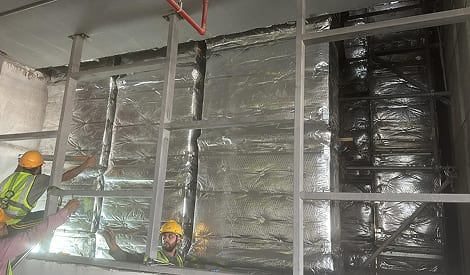
Few places test an HVAC system as hard as the western coast of Saudi Arabia. Jeddah combines sustained high temperatures with coastal humidity, so air-conditioning plant runs close to full load for much of the year. That relentless duty cycle means the difference between a well-engineered system and an average one shows up fast — in energy bills, in breakdowns, and in occupant comfort.
Whether you own a hospital, a hotel, an office tower, or an industrial facility, here is what matters most when specifying and maintaining HVAC in the Saudi climate.
Size it for the real load, not a rule of thumb
Oversized cooling is one of the most common and expensive mistakes. An oversized chiller short-cycles, wastes energy, and struggles to control humidity; an undersized one never keeps up. Proper load calculation accounts for envelope, orientation, occupancy, fresh-air rates, and internal heat gains. In a humid coastal climate, latent load (moisture removal) deserves as much attention as sensible cooling. This is core to any competent MEP design and installation.
Choose equipment that tolerates heat and dust
Equipment selected for a temperate climate underperforms here. Look for:
- Chillers and condensers rated for high ambient temperatures, so capacity doesn't collapse on the hottest days
- Corrosion-resistant coils and casings for coastal, salt-laden air
- Effective air filtration, because dust shortens component life and degrades performance
- Variable-speed drives on pumps and fans to match output to demand and cut energy use
Ventilation and indoor air quality
Cooling is only half the job. Adequate fresh air, correct pressurisation, and good filtration keep indoor air healthy — critical in healthcare and hospitality. Ventilation also manages the humidity that drives mould and corrosion when it's left unchecked. A coordinated design balances fresh-air intake against the energy cost of cooling it.
Controls turn good equipment into an efficient system
A building-management system (BMS) is what makes hardware behave intelligently: staging chillers efficiently, resetting temperatures, and flagging faults before they become failures. Without proper controls, even premium plant runs wastefully. Metering and trend data also make it possible to prove — and keep improving — efficiency over time.
Maintenance is not optional in this climate
High duty cycles mean HVAC here needs disciplined preventive maintenance:
- Regular coil cleaning to preserve heat-transfer efficiency
- Filter replacement on schedule, not when performance already suffers
- Refrigerant and pressure checks to catch leaks early
- Water treatment for chilled- and condenser-water loops to prevent scale and corrosion
- Controls calibration so sensors keep telling the truth
A planned maintenance regime typically pays for itself in energy savings and avoided breakdowns long before the year is out.
Design, install, and maintain as one
The facilities that stay comfortable and efficient are the ones where HVAC was engineered, installed, and maintained by a team that understands the local climate end to end. That's the case for choosing an experienced electro-mechanical partner over the lowest bid — a theme we cover in choosing an MEP contractor in Jeddah.
Golden International Contracting Co. designs, installs, and maintains HVAC systems across Saudi Arabia, including cooling for demanding healthcare facilities in Jeddah. Get in touch to discuss your building.
Planning an MEP, logistics, or transportation project in Saudi Arabia?
Talk to our team